The 2023 Housing Awards, presented by the AIA Housing and Community Development Knowledge Community, emphasize the importance of good housing as a necessity of life, a sanctuary for the human spirit, and a valuable national resource. This year, 10 projects were recognized for this honor across five categories:
- One- and Two-Family Custom Residences
- Multifamily Housing
- Specialized Housing
- Excellence in Affordable Housing
- Mixed-Use Community Connection
In this article, I highlight 5 exceptional Award winners that focus on multifamily, affordable, and specialized housing. Be sure to check out all 10 2023 Housing Award Winners.
Gramercy Senior Housing, Los Angeles

One of the first developments in the city to capitalize on supportive housing funds. The project delivers 64 sorely needed apartments to low-income and homeless seniors in one of the country’s most expensive housing markets.
The team’s focus on establishing connections to the outdoors across multiple levels ensures residents can engage with their surroundings and neighbors without feeling crowded. They have woven connections through all levels to reach users regardless of their age or mobility.
Architect: Kevin Daly Architects
Woodward Lofts, St Louis

Adaptive reuse of the original structure is highlighted by steel purlins and trusses, timber decking, mushroom-capital columns, and board-formed concrete.The factory’s reuse resulted in a 60% reduction in new construction costs at the time, a financial success for the client.
Architect: Trivers
MLK1101 Supportive Housing, Los Angeles

Just a short jaunt from Los Angeles’ famed Coliseum and the University of Southern California, the LEED Gold-certified MLK1101 Supportive Housing shapes an environment that nurtures health and community.
This project is a part of a wider strategic plan by the city to address homelessness. To bolster its street presence, the team tucked the parking behind a storefront space and wide staircase that connects to the community spaces on the second level. The resulting stoop is both a gathering space and a public gesture that encourages resident and neighborhood interactions not often found in supportive housing projects. Additionally, two retail units on the street level generate income that helps subsidize the housing costs while also providing workforce training for residents.
Architect:Lorcan O’Herlihy Architects [LOHA]
Sister Lillian Murphy Community, San Francisco
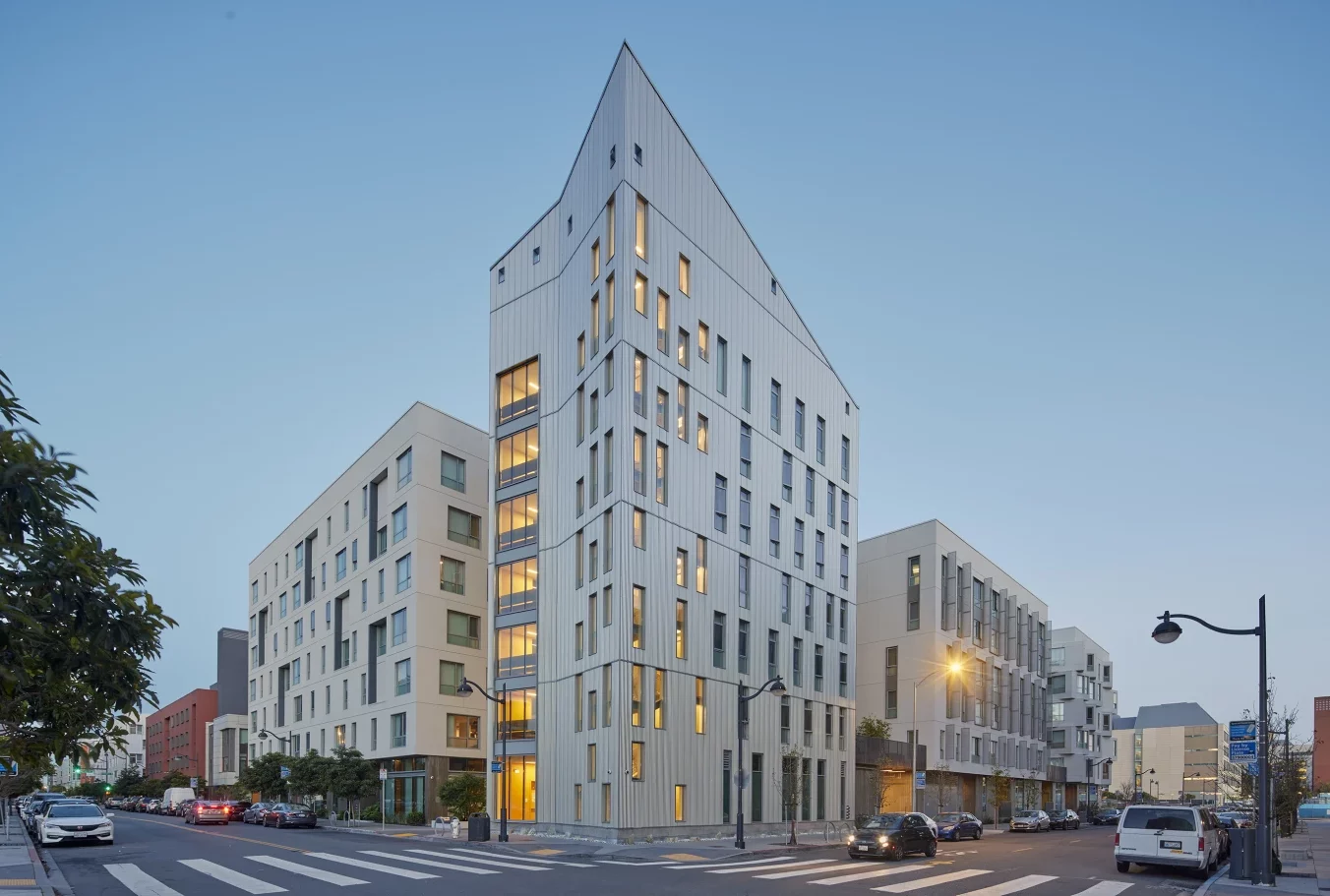
This new addition to the neighborhood, named after a champion and developer of affordable housing, offers 152 homes, from studio apartments to five-bedroom units, for households that annually earn up to 80% of the area median income.
The building’s main entry and ground-floor child development center face Mission Bay Kids Park. The south entry fronts Mission Bay Commons, viewed as the neighborhood’s “backyard” park. It contains a children’s music school, courtyard, and community room. The final wing is lower in height to respect the scale and intimacy of a mid-block pedestrian passage.
Architect: Paulett Taggart Architects Associate Architect: StudioVARA
The Block, Philadelphia
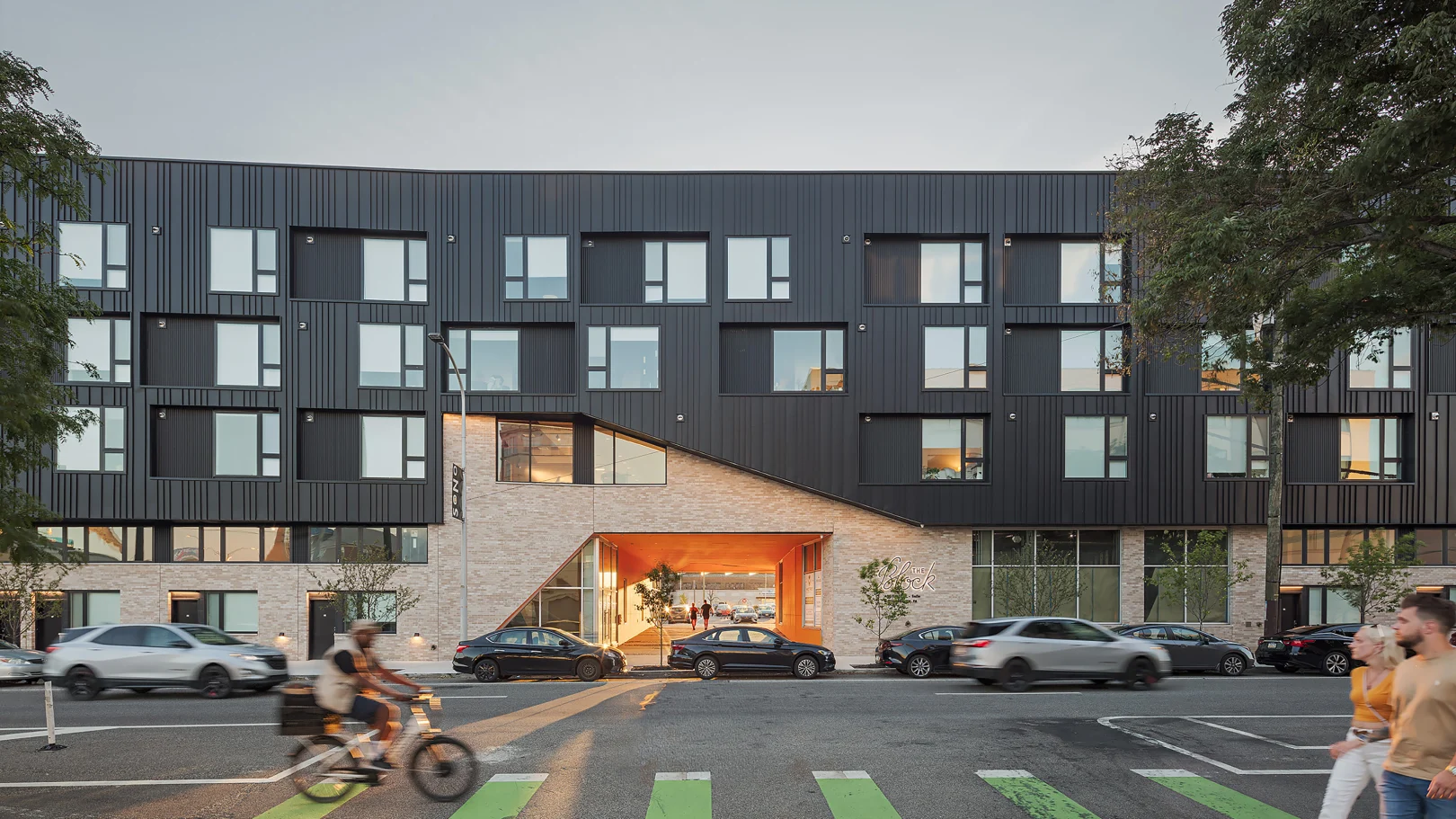
Along one of Philadelphia’s major north-south connectors, The Block adds 49 apartment units through a building. It successfully navigates the rift between the pedestrian-focused and car-centric realms. At a moment when many cities are struggling with soaring land and construction costs, The Block demonstrates an innovative low-rise and high-density approach to urban housing with potential applications for communities, both urban and suburban, across the country.
Architect: ISA – Interface Studio Architects
We love branding multi-family and adaptive reuse projects. After 25 years we have seen a lot of change in the industry. It is great to be inspired by these new projects that really address the current needs of our society.
Check out some of our other real estate projects and don’t forget to you can see the complete list of winners at AIA 2023 Housing Awards.
We’d love to know what you think. Send us a note and tell us about it.